
Find an Idaho Street by Address
No single statewide resident file matches an Idaho address to a name. Every lookup begins by naming the county. Each one keeps its own property rolls and indexes. Hold the postal form, city, and parcel details together from the start. Then each record stop, from the assessor to the recorder to the voter rolls, fills in one piece: map position, title, registration status, or a historic directory name.
- Standardize the delivery address with the USPS address and ZIP lookup, then identify the Idaho county and city or unincorporated area.
- Search the Idaho county assessor’s property roll by address or parcel. Copy the owner name, situs address, tax mailing address, parcel number and legal description as separate fields.
- Open Idaho county GIS, select the parcel, and note adjoining parcel IDs instead of guessing which lot matches the next house number.
- Use the Idaho county recorder’s index to check instruments tied to the owner and legal description. A voter status check is for the voter; reports follow a separate request and use process.
- For an earlier name at an Idaho address, check a library reverse directory or telephone book for the right year. Treat the entry as a dated clue, not a full resident list.
Idaho Street Directory Search Fields
A county property search is the first address-keyed record worth checking in Idaho. Ada County shows the pattern with its Assessor property-search entry point and the CentralSquare property search. Both tools stay county-specific. Idaho has no single state owner-and-address search. The street directory workflow repeats county by county. The search screen marks three required fields and offers map, search, and print actions.
| Control | Type | Needed | What the Idaho search shows |
|---|---|---|---|
| Search By | Dropdown | Yes | Choose the search mode, including parcel, address, subdivision, online documents or map routes exposed by the assessor site. |
| Search Operator | Dropdown | Yes | Sets a comparison rule; the exact option labels were not exposed in the inspection. |
| Search Value | Text | Yes | Enter a parcel, address or name that fits the selected mode. |
| Map | Map control | No | Pan or select a parcel to see nearby lots. |
| Search / Print | Buttons | No | Submit a search or format the record currently on screen. |
A single result can open into Parcel Info, Owner Info, Restriction Details, Land Use, Building, Legal Desc, and Inspections. The owner panel and the map pair well, but remember that an owner's mailing address may sit somewhere else entirely from the parcel.
A typical Ada County, Idaho, result inventory includes:
- Parcel number and Parcel Info.
- Owner Info, including a mailing address distinct from the situs.
- Restriction Details and Land Use.
- Building characteristics and Legal Desc.
- Inspections in the ACHD portal.
- Map context with nearby parcels.
- Image access controls, with no search-screen fee shown in the inspection.
Idaho Street Directory Sources
Address records in Idaho live with local custodians, not one state office. A useful table separates what each source can establish from what it cannot. The street directory, in other words, is a set of property rolls and indexes, not a public roll of every person at each door.
| Record set | Idaho keeper | What it may show | Access route and limit |
|---|---|---|---|
| Assessor parcel card | Idaho county assessor | Idaho owner, mailing and situs addresses, parcel, value, exemption and property details. | Idaho county portal or assessor counter; no statewide owner search. |
| GIS parcel map | Idaho county GIS or assessor | Idaho parcel shape, roads, address points, overlays and adjoining lots. | Idaho county map; Idaho Map gives statewide context. |
| Deed and plat index | Idaho county recorder, clerk or auditor | Parties, recorded instrument, Idaho legal description, liens, plats and transfer sequence. | Idaho county index, public terminal, office request or older books and microfilm; image access varies. |
| Tax record | Idaho county treasurer | Taxpayer, assessed tax, payment or delinquency, and sometimes an Idaho tax-deed trail. | Ask the Idaho county treasurer with a parcel number or legal description. |
| Permit or code record | Idaho city or county office | Address, project, contact, status, dates, inspection and documents. | Idaho local portal or records request; retention varies. |
| Voter report | Idaho Secretary of State or county clerk | Fields in a permitted report, with confidential Idaho records excluded. | Idaho request route and lawful-use rules apply; the status tool is not a block browser. |
| Reverse directory | Idaho library or archive | A past address-to-name or subscriber connection for a published year. | Idaho library collection, request or licensed database; gaps and omissions remain. |
A parcel ID ties the assessor, GIS, and recorder together, but it never lists occupants. The Tax Commission points parcel searches back to the county assessors.
Idaho Address and Parcel Terms
Idaho property records can carry several address fields at once. Their differences matter whenever a street number or mailing label has changed over the years.
- Parcel
- An Idaho county-mapped land unit with an identifier. One address may span parcels, or one parcel may hold several structures.
- Situs address
- The Idaho property location, which may differ from its owner’s tax mailing address or USPS mailing city.
- Legal description
- The Idaho recorded land wording, such as subdivision lot and block or metes and bounds. It can link an older deed to a parcel.
- Plat
- An Idaho recorded map of subdivision lots, streets and easements. Older plats may be in a recorder’s vault or on microfilm.
- Criss-cross directory
- An Idaho address-keyed book linking a street address to a listed name or subscriber for one year.
Address authority in Idaho is local. County GIS, city planning, emergency communications, USPS, and recorded plats each hold part of the picture. When a road is renamed, annexed, or renumbered, the parcel ID and legal description are what link the old records to the new.
Idaho GIS Layers Along Streets
The Ada County, Idaho, assessor map searches by parcel or address. It jumps easily to adjoining parcels. Boise layers in address points, parcels, roads, and city and county lines. It also adds buildings, zoning, historic overlays, and imagery. Its neighborhood-association layer returns a name, ID, and active status, never a list of people.
The Ada CentralSquare parcel screen displays the search controls. It also shows the linked owner, legal-description, and map results behind any Idaho parcel lookup.
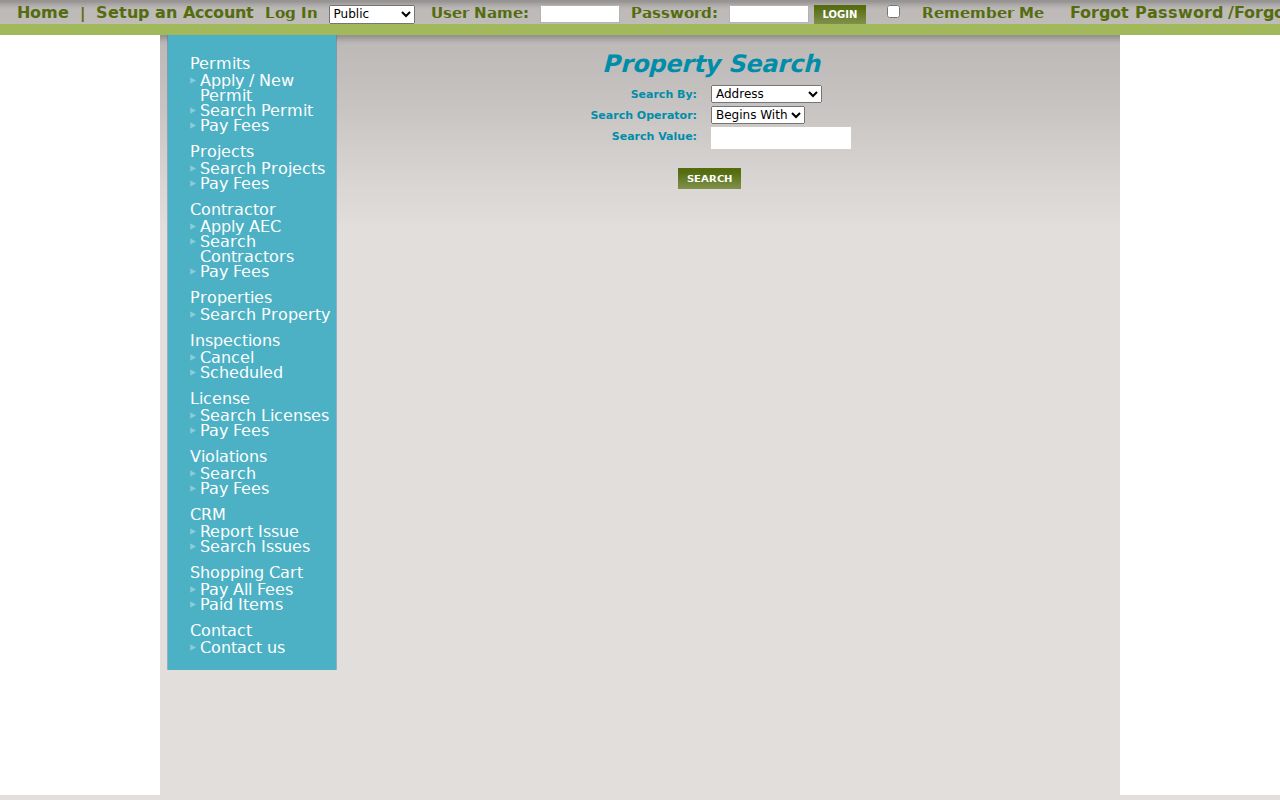
From a selected parcel, the map link lets a search slide to the next one over. Record the parcel IDs first. Then open each property record rather than assuming street numbers march in order along lot lines.
Follow an Idaho Deed Chain
The recorder index for an Idaho street parcel lists recorded parties and instruments, not everyone who ever used the address. Begin at the assessor. A grantor transfers an interest; a grantee receives one. Search the owner as grantee using the legal description and a likely date range. Deeds, quitclaims, trustee deeds, mortgages, and releases each mark a different event. A mortgage by itself is not a sale.
- Copy the parcel number, current owner and full legal description from the Idaho assessor.
- Search the county recorder index for that owner as grantee and narrow by document type and period.
- Capture the grantor, grantee, recording date, document number, book and page, document type and legal description.
- Search the grantor as an earlier grantee for the same legal description, then compare the next instrument.
- If a sale, estate or tax transfer breaks the chain, follow its instrument or case reference and check the plat before moving to the next parcel.
In Idaho, the index may name a trust, company, estate, or joint owners rather than a household. Preserve the sequence of instruments as you go. A deed proves a recorded interest; a tax mailing address only shows where the bill went.
Idaho Recorder Index Access
County systems vary across Idaho. Canyon County holds 1864–1997 records on microfilm. An online index runs from 1984 forward, but images stay office-only. The Canyon County Recorder takes email requests. It offers public terminals and microfilm readers at 111 N. 11th, Suite 330, Caldwell. The phone is 208-454-7555 and weekday hours run 8 a.m. to 5 p.m.
Latah County's Property Records Research accepts a partial or full "Lastname, Firstname" entry. It also takes an instrument number. Its sample result inventory shows:
- Document or instrument reference.
- Book and page.
- Party name and party type.
- Document type and total pages.
Results cap at 5,000, and documents over 50 pages cannot be viewed online. For official copies, call the Auditor at 208-883-2249 or visit 522 S. Adams, Room 101, Moscow. Fees run $1 per page plus $1 for certification.
When a county index runs thin, ask the recorder or clerk about public terminals. You can also ask about vault books or microfilm. Duties may sit with an auditor or a combined office. So the Idaho county-clerk directory is worth checking to confirm the custodian before mailing any request.
Idaho Voter Records by Street
VoteIdaho's tool serves one purpose. It lets a voter check their own status and election details. You reach it with a name and date of birth. Session controls guard the lookup. It is not a street browser. County clerks across Idaho administer registration itself. Participants in the Address Confidentiality Program get extra protection. Their real address stays out of ordinary public records.
For voter-registration or absentee reports, use the Secretary of State's public-records route or ask a county clerk who holds the report. Idaho Code §74-120 forbids using public-record lists as mailing or telephone lists. Copy fees and formats depend on the custodian, so ask when you request. The state's Address Confidentiality Program also substitutes a safe mailing address. It keeps voter registration confidential for eligible participants.
A few cautions belong here. Party preference is not a ballot choice. A voter record does not prove who occupies a home today. Requests need your contact details and a specific record description. Exemptions plus allowed copy or labor charges may apply.
Idaho Permits Add Address Dates
Boise offers a Building Search with many entry points. Search by record number, type, status, or dates. A project or person name, organization, parcel, or a street number range with direction, name, and type all work too. Results can include location, contact, status, inspections, documents, and related records. Those dates track project activity only. They do not establish who lived at an Idaho address.
Anonymous viewing is limited. Full application histories, invoices, receipts, and status functions require a free account. The portal does not state how far back its history reaches. Elsewhere in Idaho, use the local planning or building office's portal, or ask the custodian for records by parcel or street number.
Read a permit contact carefully. It may be an owner, agent, designer, or contractor. Treat the file as a project record, then pair its dates with the matching assessor parcel and recorder instrument.
Idaho Reverse Directories by Street
Historical directories connect an old Idaho street address to a name, business, or subscriber. Boise Public Library holds Polk directories from 1891 to current. It also holds telephone books from 1948 to current. Its Hill-Donnelly cross-reference runs cover 1969–1970, 1872–1991, and 1993–2004. The Archives keeps a detailed Polk run from 1891 to 1945. Farr & Smith's 1901–1902 Boise and Ada County directory is indexed by address. That indexing is a rare help for past-residents work.
The Boise Public Library local-history service in Idaho sends located pages by email. It also sends them by mail or fax. A directory or phone-book page carries a $1.25 fee, with weekly request limits. Coverage has gaps. Not every resident subscribed or appeared. Some small towns were filed under a larger telephone exchange. For full collection years and entry details, see the Idaho city directory collections. One edition year may show a subscriber or business at an address. Only that year shows it.
Idaho Streets and Postal Boundaries
Idaho has no statewide street-numbering grid. Cities and counties assign site addresses. GIS, planning, emergency communications, USPS, and plats each hold one piece of the location record. Postal labels for Boise, Meridian, and Pocatello can cover multiple ZIP routes. They can also cross city or county lines. The Idaho Blue Book lists one representative ZIP per post office, not city limits.
Confirm a current delivery ZIP with the USPS address lookup first. Then turn to county maps for the parcel jurisdiction. USPS itself cautions that a ZIP result does not confirm a person or company. It does not confirm a company at the address either. Idaho's Geospatial Office links statewide maps, but county custodians maintain the authoritative parcel data.
Older street names and numbers can differ from today's. Compare the legal description, plat, annexation record, historic map, and directory year. Idaho publishes no statewide renumbering chronology. So ask the local clerk, planning or GIS office, or county recorder. Keep the historic county name in mind. The State Archives' county and city holdings date to 1863.
What Idaho Street Records Leave Out
Every Idaho record has edges. An assessor lists property and owners, not every person who lives at an address. A voter status match serves only that voter's own check. A permitted report is not a public block browser. A directory can omit anyone unlisted in its edition.
Idaho public records also keep ordinary driver-address data, utility customer files, and delivery records out of view. The federal Driver's Privacy Protection Act restricts motor-vehicle address disclosure. Use each record for its stated purpose. Verify with the custodian. A deed, tax mailing address, or voter entry does not prove a current household, and confidentiality rules hide some actual addresses.
Privacy and lawful use. Idaho address and property records can support personal research, family history and civic understanding. Do not use a street search to stalk, harass, intimidate or harm anyone.